
The short answer.
Separate a bright flavor you enjoy from a sharpness you find unbalanced.
Compare one controlled change against a familiar recipe.
Judge the complete drink in the way you normally consume it.
Start with your own description
Some coffee drinkers enjoy a bright, lively cup; others prefer a softer or more roasted profile. There is no need to call a coffee defective because it is not your favorite. Describe what you notice: a pleasant fruit-like impression, a sharp sensation that dominates, or a thin cup with little sweetness or body.
Compare with a drink you already enjoy. If the sharpness appeared after opening a new coffee, the beans are part of the question. If it appeared with the same coffee after a setting change, begin with the recipe. This simple history helps prevent random adjustments.
Keep the experiment controlled
Use a consistent cup and a familiar preparation. Record the visible settings before changing anything. Blue Bottle's grind guidance describes under-extraction as one possible source of an unpleasantly sour result and suggests adjusting grind as part of dialing in. That guidance does not mean every bright coffee is under-extracted, or that all machines should be adjusted in the same way.
Follow the exact appliance instructions for grinder changes. Some controls operate differently from a separate manual grinder. Never force a mechanism or assume an online tip for another model applies to yours. A single sensible adjustment is more informative than moving through the full range.

Compare the complete drink
If you usually drink milk coffee, taste the finished recipe rather than judging only the espresso component. Milk amount, drink size, and sweetness can change how the coffee is perceived. Keep those factors stable while testing the coffee setting.
Taste after the drink reaches a comfortable temperature and again a little later. Make notes in ordinary words. “Less sharp but now too heavy” tells you more than an arbitrary numerical score. You can then choose whether the next step is another small recipe change or a different coffee.
Accept a preference when you find one
Not every coffee needs to become your daily choice. If a stable, correctly prepared recipe still has a flavor you do not enjoy, choose a different profile rather than treating the experience as a failure. Ask the roaster for a suggestion based on the drinks you already like.
If the change is sudden and accompanied by unusual machine behavior, stop the tasting exercise and seek product support. Otherwise, keep the process modest: one baseline, one change, one comparison. Learning what you prefer is more valuable than chasing a supposedly perfect setting that ignores the way you actually want your coffee to taste.
Put it into practice
Keep two separate judgments in your notes: whether the preparation improved and whether you like the coffee. A cup can become more balanced while retaining a flavor profile you do not prefer. Recognizing that distinction saves unnecessary adjustment. It also helps a roaster suggest a more suitable alternative because you can explain both the successful preparation and the character you would rather change next time.
Do not turn a tasting word into a diagnosis
A shopper may describe a coffee as sour when they mean citrus-like, thin, unexpectedly fruity, or simply different from a familiar darker-tasting cup. Write what you actually experience and whether you enjoy any part of it. The point is not to teach yourself to like every coffee. It is to identify whether a recipe adjustment is worth exploring or whether another coffee would better match your preference.
Compare the drink as you normally serve it. A coffee that feels sharp alone may behave differently with milk, while a sweetened iced version introduces still more variables. Keep the intended serving method consistent when testing. Otherwise, you may conclude that a machine setting solved the problem when the real difference came from milk, dilution, temperature, or sweetness.
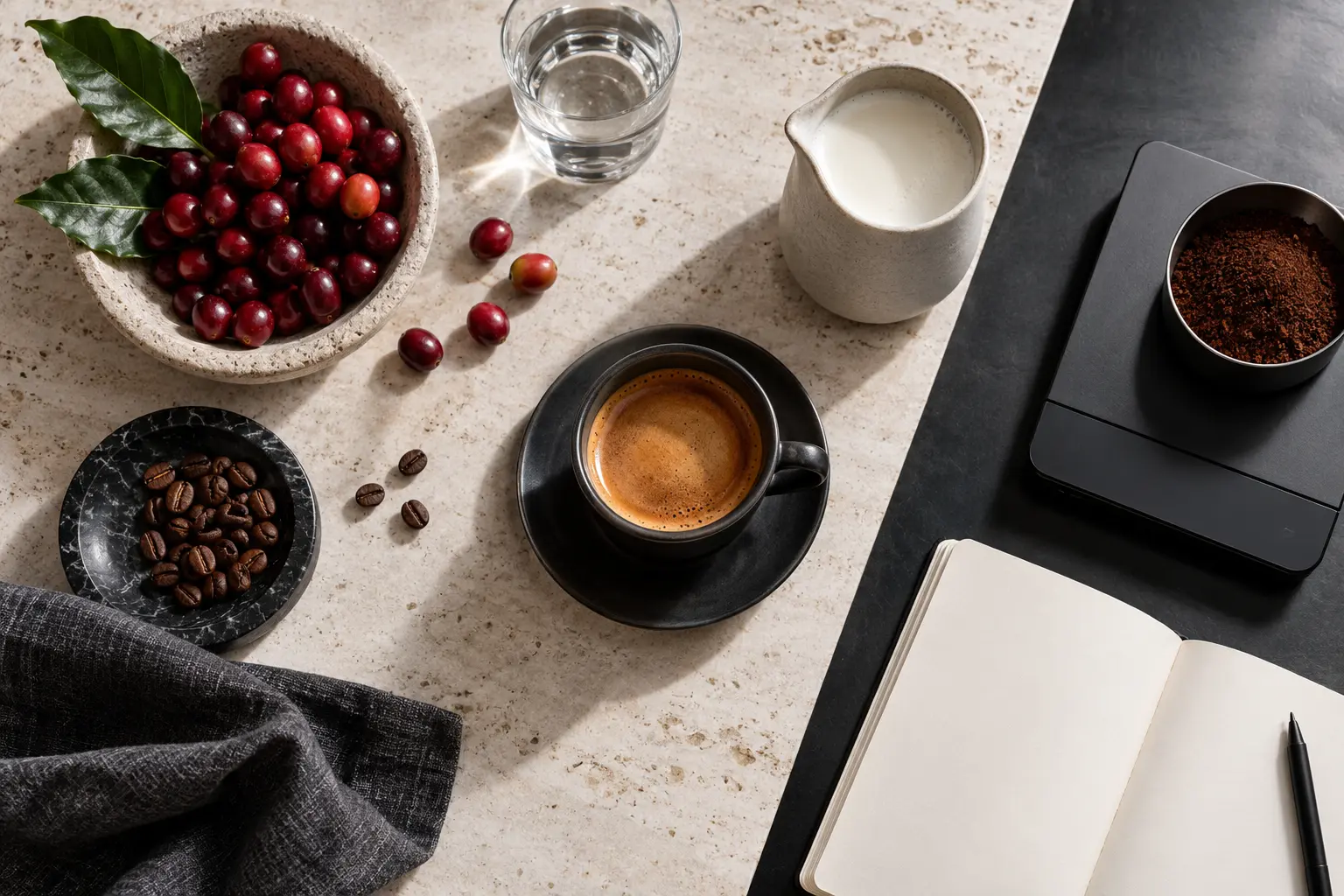
Use a short decision path
First confirm the selected recipe and that ordinary care and setup are in order. Next, decide whether the sharp impression started with a new coffee or a changed setting. Restore the known baseline where possible. Then make one supported adjustment and compare. This sequence reduces the chance that several unrelated changes will obscure the useful answer. It also makes the result easier to explain if you ask for help.
If you still do not enjoy the coffee after a reasonable trial, it is acceptable to choose another coffee rather than endlessly adjusting around a flavor preference. Keep a note of what you liked and disliked so the next purchase is more informed. Persistent sudden changes, errors, or unusual operation deserve model-specific support, especially when a familiar coffee and recipe no longer behave as expected.
Useful answers, before you decide.
Is acidity always a defect in coffee?
No. People use brightness or acidity to describe flavors that some enjoy and others do not. Your decision should focus on whether the complete cup tastes balanced and pleasant to you, rather than treating a single tasting term as automatically good or bad.
What if the same coffee tastes different with milk?
Evaluate it in the drink you actually intend to make. Milk changes flavor and balance, so a black-coffee comparison may not predict your preferred latte. Keep the milk and coffee recipe consistent during a useful trial.
Research notes and sources
These references informed this guide. Manufacturer instructions and final purchase terms take precedence.
- Blue Bottle Coffee — Dialing in grind
 Coffee craft · 5 min
 Coffee craft · 5 min
 Coffee craft · 5 min